
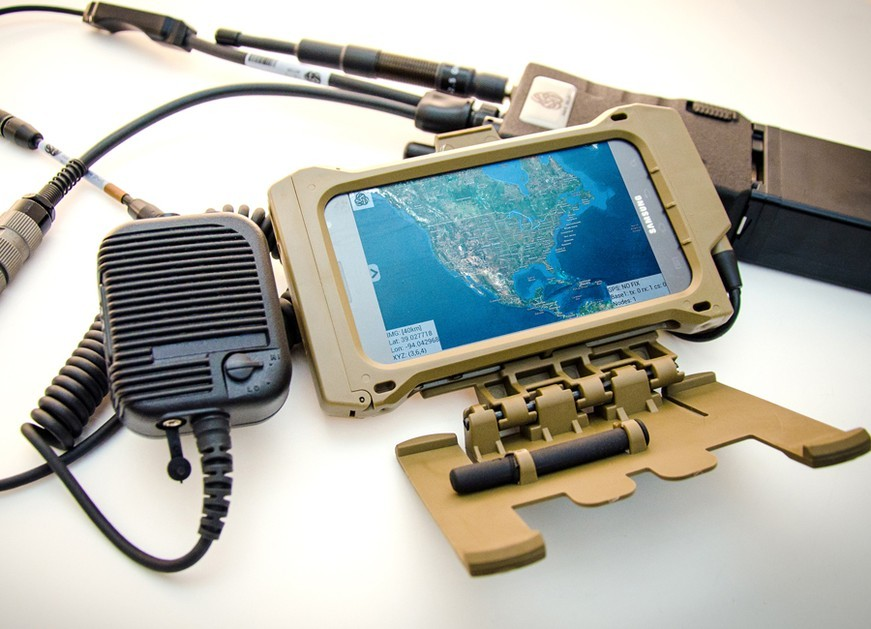
How do you shoot, move, and communicate?
Inserting tech into the shoot, move, and communicate motto.
Read More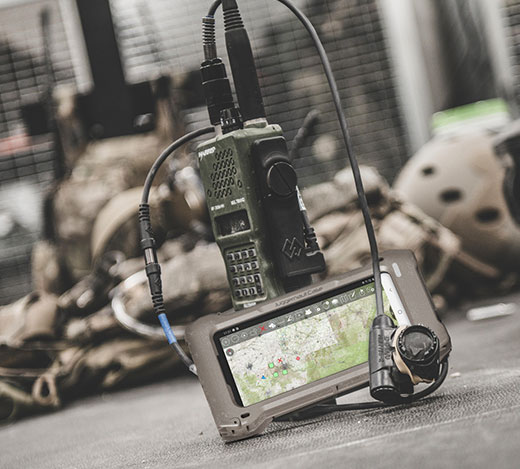
Communications are Vital
Radios are key in disaster scenarios. Every tactical and rescue team utilizes them. Where is yours?
Read More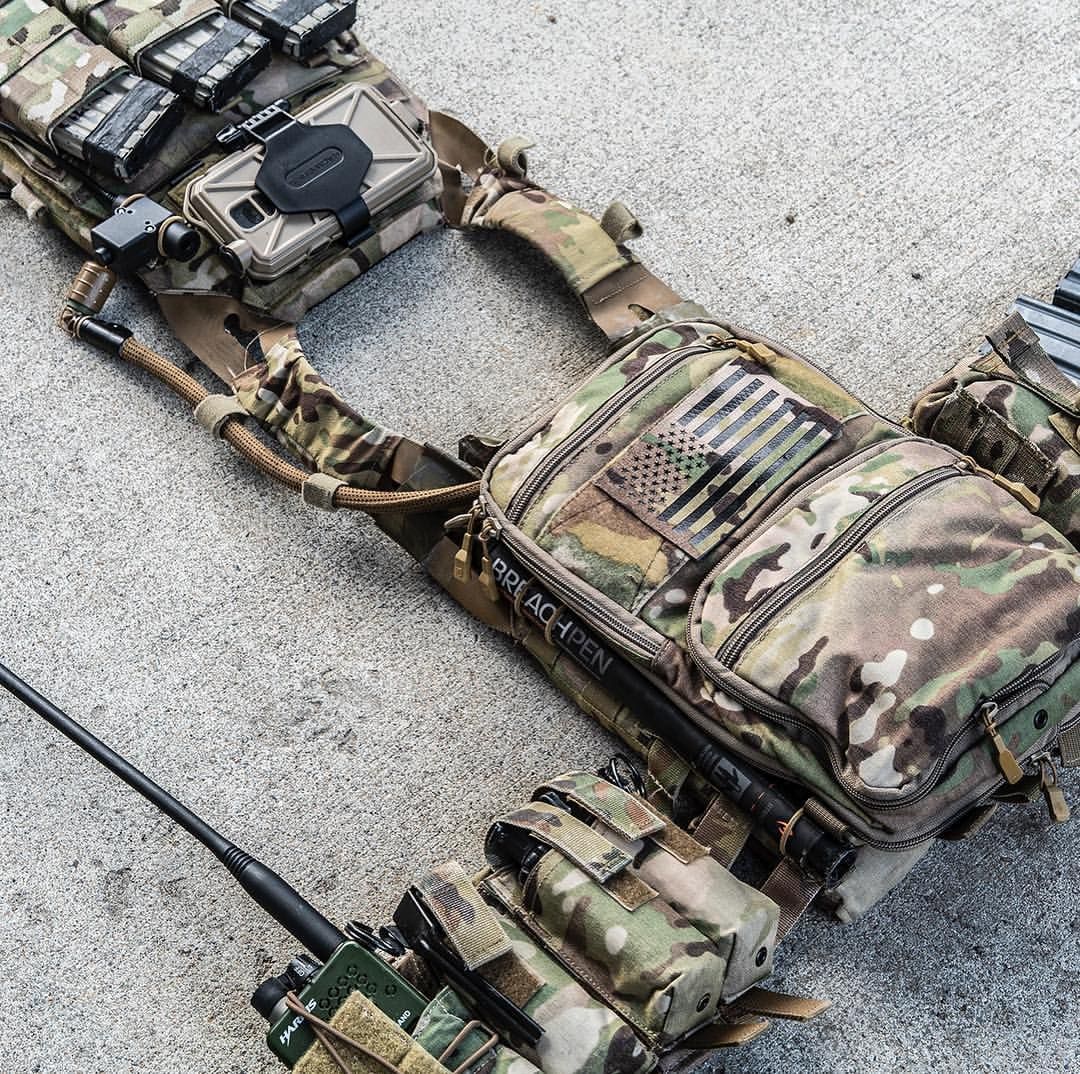
How would you navigate in a world without Google Maps?
Our cell phones have become a big crutch for us. Let's flex or build the skill to navigate during a disaster when they don't work.
Read More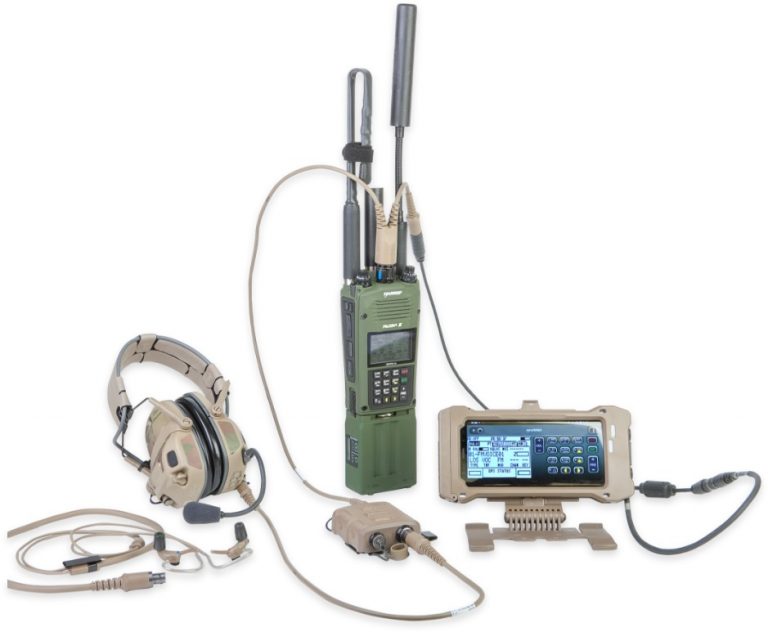
Why NavComm?
Many of us train hard with shooting. We obsess over our gear. But we do it as individuals. We compete as individuals. Rarely do we train or interact as teams. When the real disasters strike, communications are vital. When the Internet is out and the cell towers are dark, we absolutely need to know how to get to our friends and family. Society is built around having a community. How do you interact with yours during a disaster or when you train?
Specialties:
- Team and Community Communications
- Land Navigation with GPS
- Team Awareness
Shooting, tactics, and gear are awesome in all their forms. but how do you shoot, move, and communicate as a team?
Why have a GPS?
We live in a Google Maps generation. We didn't use to. When the signal stops, how are you going to get to your friends and family? Garmin is the hands down leader of devices from watches to offline GPS devices. Instead of just recommending products, I want to provide background information to help you find the right device for you.
Requirements:
- Offline
- Map Packs
- Emergency Communication
There are a lot of things to think about when switching from a Google Maps mindset to GPS mindset.
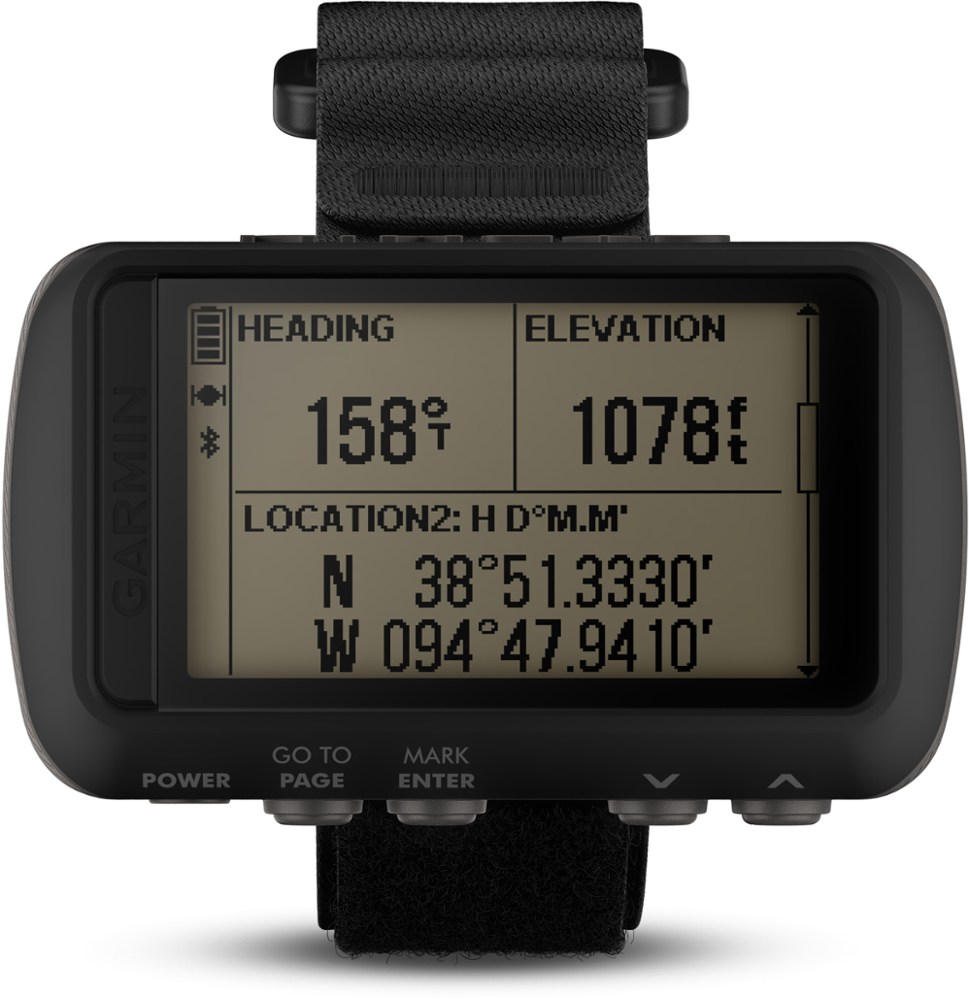

Garmin Fortrex 601
This where it started. The millitary needed a way to know exactly where they were. This is the latest itiration in the Garmin line that will give you precise positioning information without maps. It features:
- Position
- Tracking
- Compass
- Waypoints
- Powered by 2x AAA Batteries
This is a great GPS. However, to maximize its potiential, it needs to be paired with a solid understanding of land navigation and how to assemble your own maps. We talk about these topics in the A World Without Google Maps class.
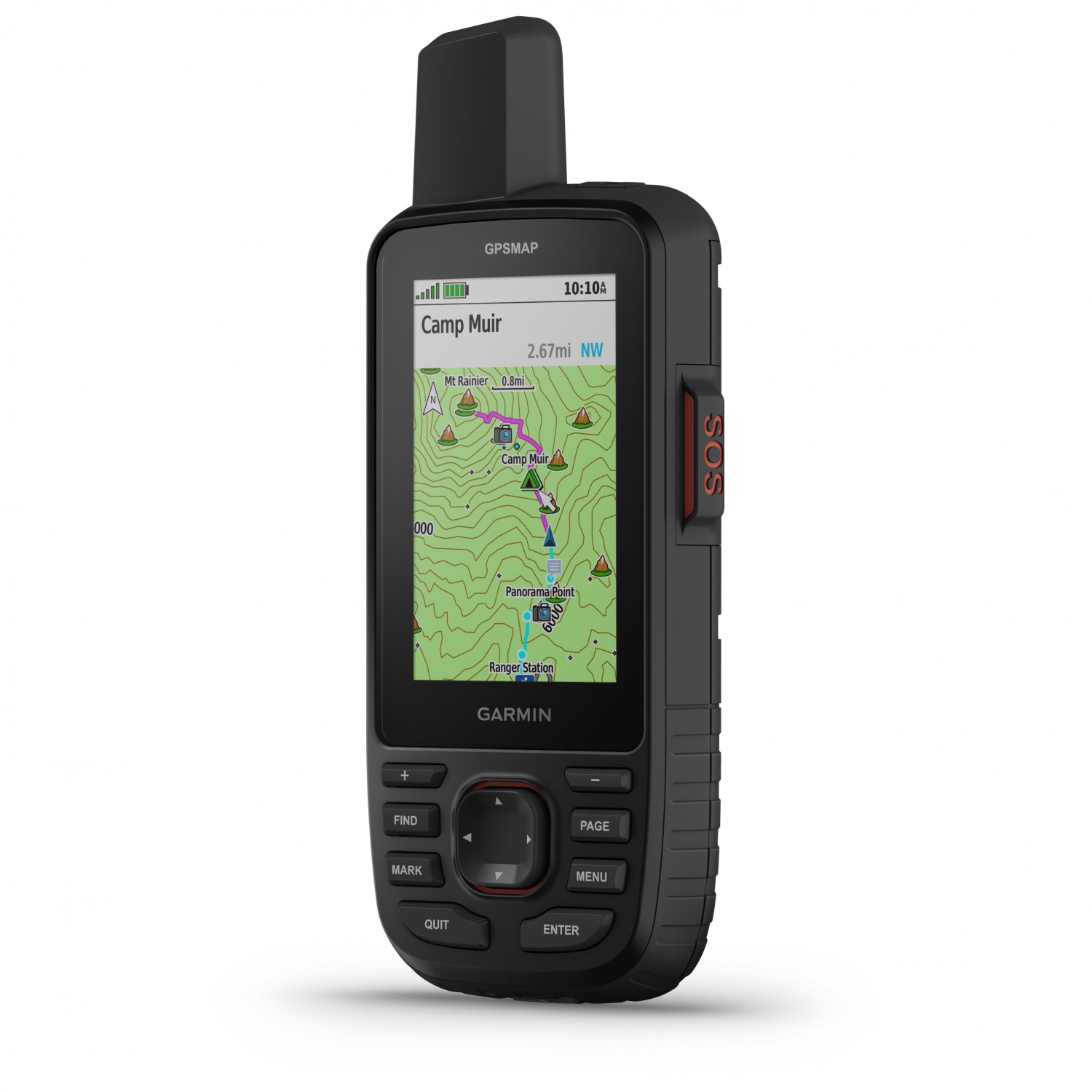
Garmin GPSMAP 67i
This is your full offline GPS companion device. This will give you a full range of maps for driving, hunting, topographical, hiking. A lot of information can be stored, imported, or manipulated. This model also has the emergency button which allows it to have a satalite messaging service. This is the model that we recommend in our A World Without Google Maps class. It features:
- Maps
- Tracking
- Compass
- Waypoints
- Extra Tools
- Satalite Communications, Messaging, and Imagery.
- Emergency Button
- USB-C Recharable
This is a seriously full featured GPS. It doesn't require anything out of the box. We recommend our A World Without Google Maps class in order to jump you across the divide between modern app GPS and device-based GPS.
Why have a radio?
You got to talk to your community. But how do we do that? Radio is a lost art that has a lot of complexities. Most of it can be distilled and simplified into easy solutions to accomodate needs. I'd like to layout a path to the different solutions through articles and classes.
What we are looking for in a radio:
- Easy to Use
- Programable (or Pre-Programmed)
- Upgraded
Radio isn't a science. It is an art. Use the following radio tiers as a guide to figure out where to start.
| FRS |
Family Mobile Radio Service has 21 channels and a maximum of 2 watts of power which typically results in less than a mile of range. FRS does not require any licenses or FCC issued call sign to use. Recommended Radio(s): Either Motorola Talkabout T800 or Motorola Talkabout T600. |
| GMRS |
General Mobile Radio Service has the same 21 channels and the maximum of 5 watts of power which results in about 2 miles of range. In addition to the regular 21 channels, GMRS offers 8 more channels with a maximum of 50 watts of power offering up to 30 miles of range with excellent antennas. NOTE: A GMRS license is $30 through the FCC and offers the license holder and family a 10 year ability to use greater power and GMRS repeaters without the necessity of a call sign (unless asked). |
| Amateur Technician License | A (HAM) license gives you greater range, bandwidth, and flexibility. The main benefit is to utilize area repeaters and interlinked repeaters systems to be able to obtain greater range. (Example: There is an interlinked repeater system that spans the West side of Michigan from St. Joe to Traverse City.) The typical handheld radio for amateur use still only uses 5 watts of power. Mobile (vehicle based) radios can utilize up to 50 watts of power. Tests and an FCC license is required. |
| Amateur General License | A higher level amateur license offers entry into the HF bandwidth and space. This encompasses world wide communications. It requires multiple test and licenses from the FCC and deep knowledge on radios, antenna design, and frequency manipulation. |
| Unlicensed |
Motorola has developed radios in the 900mhz ISM band. These radios are digital radios and are designed to be in dense spaces with a lot of radio interference and businesses (Example: Mall or hospitals). This offers the perfect tactical team based radio for "secure" communications without the need for a license. NOTE: Unlike all the other radios referenced, these radios can only be configured to talk to other specific radios and do not receive NOAA, VHF, UHF, or aviation frequencies. |
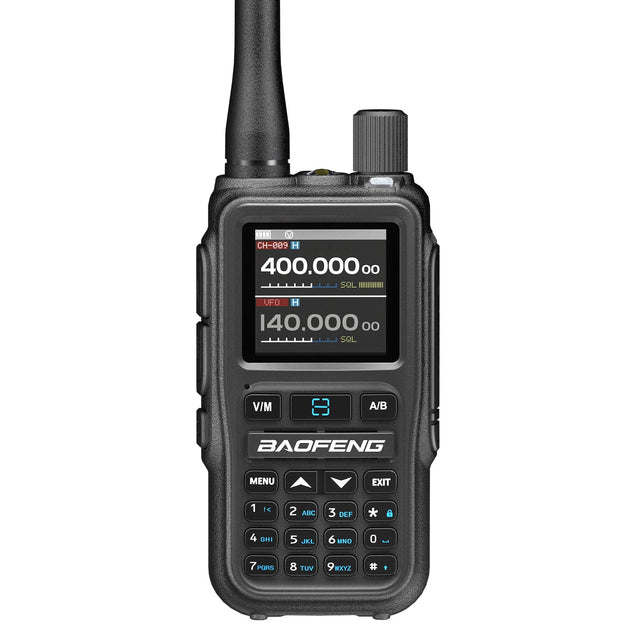
Baofeng UV-5R Mini
Excellent and simple starter radio. It offers an incredible bang-for-the-buck.
- USB-C charging
- NOAA Weather channels
- FRS/GMRS channels
- VHF (Amateur repeater) channels
- UHF (Amateur repeater) channels
- Airband channels
While still chinesium, this radio gets you off the ground quickly and easily with a substantial channel range for listening or communicating in a compact little package
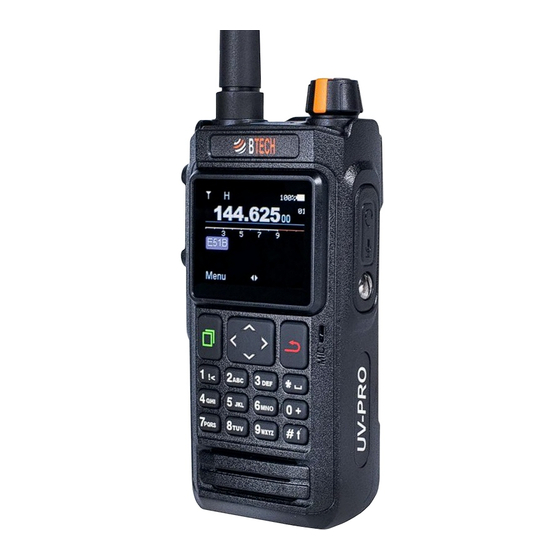
BTECH UV-PRO
Excellent advanced radio which offers APP programming, updating, and audio along with GPS functionality which can be setup to share location information to other team members with either a GMRS-PRO or UV-PRO offline through radio frequencies.
- USB-C charging
- NOAA Weather channels
- FRS/GMRS channels
- VHF (Amateur repeater) channels
- UHF (Amateur repeater) channels
- Strong app support
This is a masssive next step radio which is great for teams that are starting to advance past audio communications and considering making the investment in ATAK.
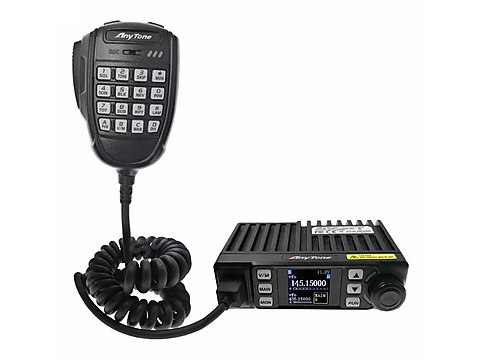
Anytone AT-779UV
Think of this radio as the big brother to the Baofeng UV-5R Mini. This radio is meant to be a mobile radio which is the next step up from a handheld radio. It offers more ouput power because it is designed to be installed in a vehicle.
(NOTE: This radio requires some parts and pieces depending on your vehicle. It can also be setup as a micro desktop radio, manpack radio, or all three. Please reach out to me and let me know what you would like to do in order to include the right pieces and parts in your order.)
- NOAA Weather channels
- FRS/GMRS channels
- VHF (Amateur repeater) channels
- UHF (Amateur repeater) channels
This is a great radio to increase your range.
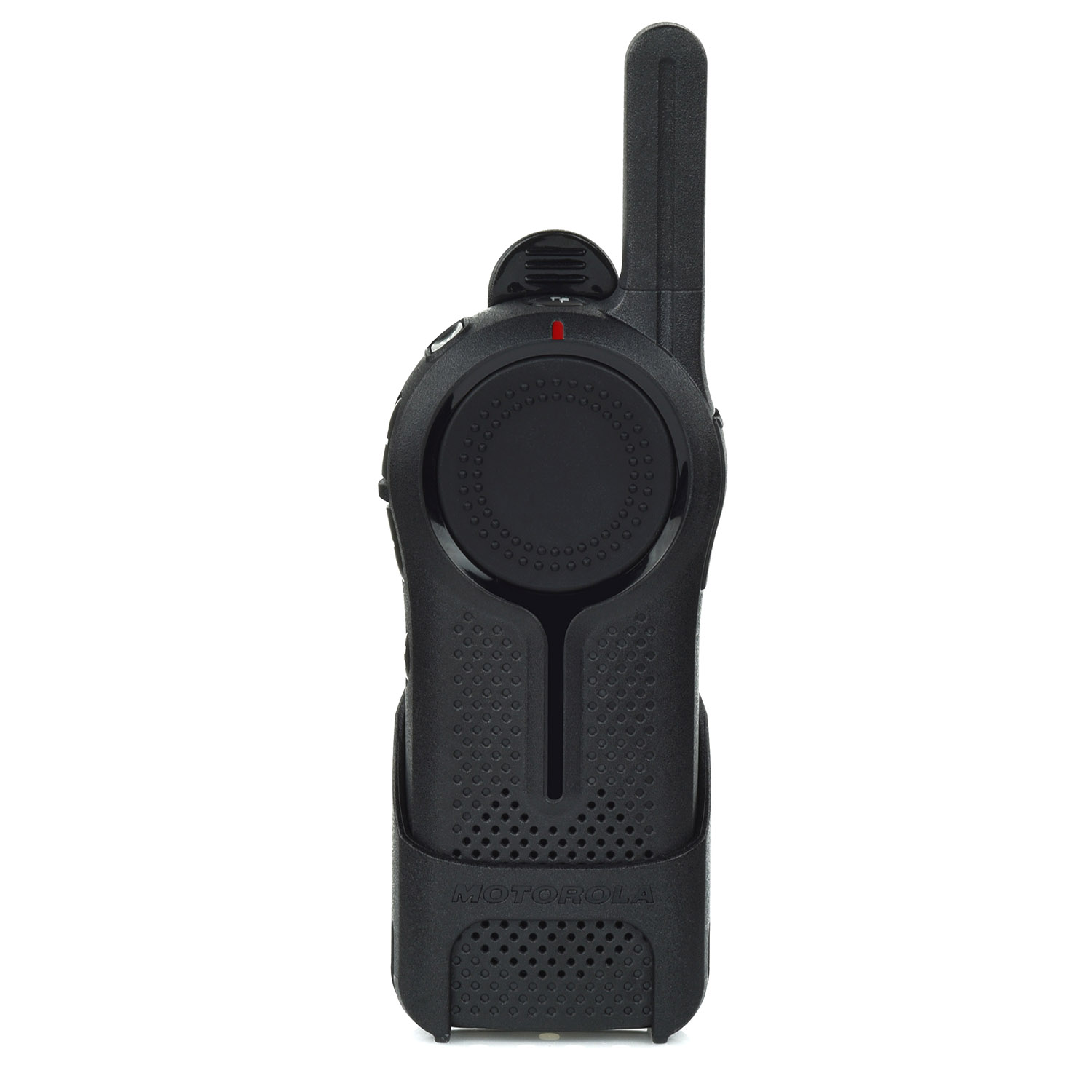
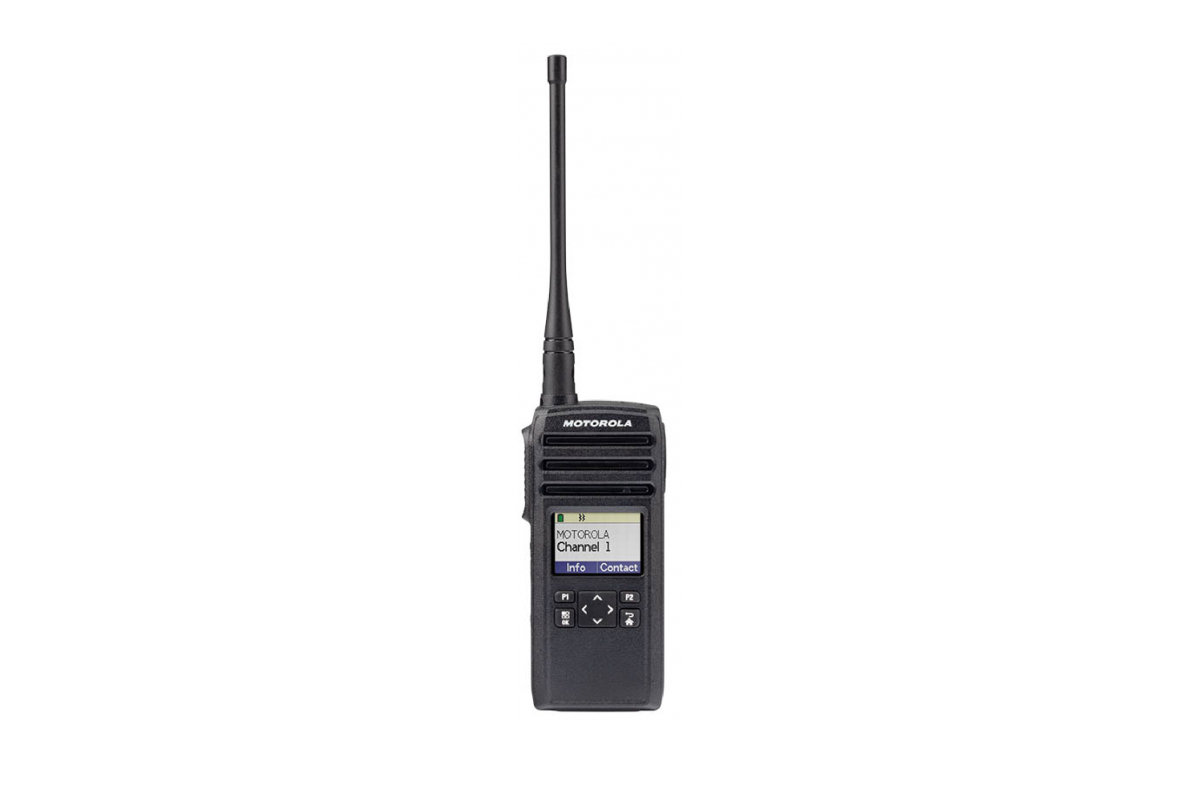
Motorola DLR 1020
These are small, simple radios for teams requiring more operational security and a quarter mile range.
(NOTE: These radios do NOT receive NOAA, FRS/GMRS, VHF, UHF, or aviation frequencies. They are also programmed to only talk to other specific radios. If you originally started with 4 radios for a team and wanted to add another radio for team support, all radios would need to be programmed for that new radio.
- Frequency Hopping Spread Spectrum (FHSS) communication
- Swappable batteries
This is a great, light weight, team radio to increase operational security and reduce interference.
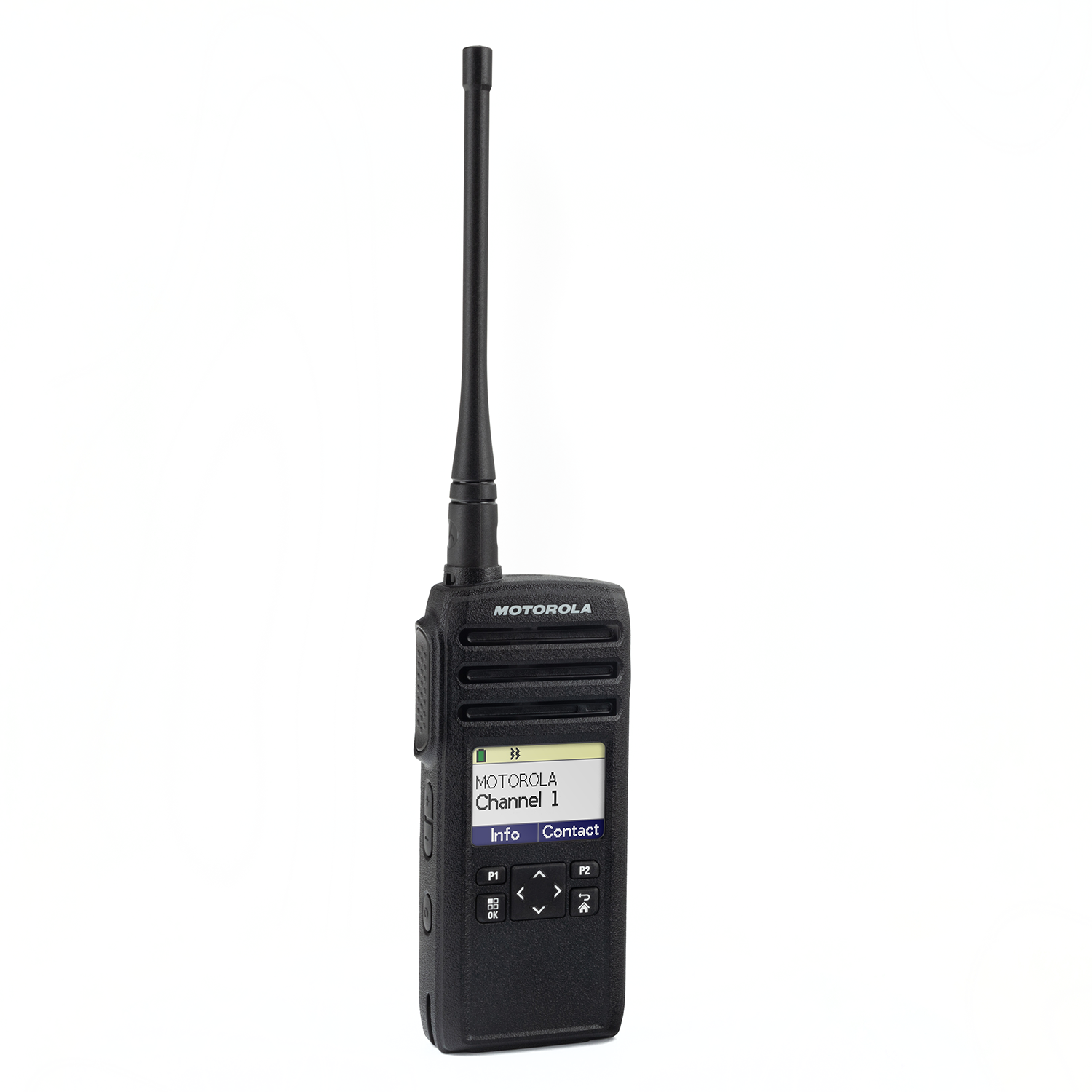
Motorola DTR 700
These are the next step up from the DLR 1020. These radios have a display and more power (which increases range). They can also be setup for pre-built text messages.
(NOTE: These radios do NOT receive NOAA, FRS/GMRS, VHF, UHF, or aviation frequencies. They are also programmed to only talk to other specific radios. If you originally started with 4 radios for a team and wanted to add another radio for team support, all radios would need to be programmed for that new radio.
- Frequency Hopping Spread Spectrum (FHSS) communication
- Swappable batteries
This is a more powerful team radio focusing on operational security and reducing interference while providing more creature comforts and features.
Radio Cheat Code
Typically most people simply want to talk to a small family/friends group while out of normal cell phone range and listen to weather and emergency broadcast information.
I recommend getting your GMRS license and a regular "ham" radio such as a Baofeng UV-5R Mini. This gets you communication within a loose family unit at a higher range with the ability to listen to other useful frequencies. It also offers the ability to transmit in an emergency on channels that could be listening and active. If you decide to get your amateur license, the radio will be setup for use on repeaters as well.
Why have team awareness?
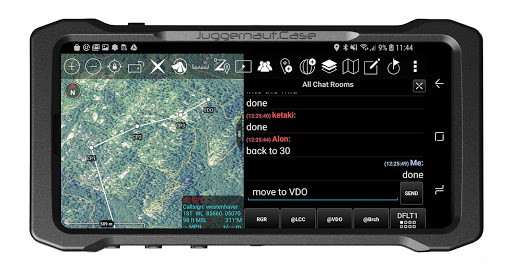
ATAK is a game changer. Howerver, what a lot of people have learned trying to setup and use ATAK is that it was ripped out of the military environment and begrudingly given to the public. It was designed to work with military radios. Hardly any civilian radios are compatible. Several plugins have been developed to work with varios radios.
- GOTAK with the BTECH UV-PRO.
- Mohave Repeater with Hytera radios.
In addition to special (and more expensive) radios, special ATAK plugins (also expensive), I typically recommend getting a secondary Android device to be decicated to ATAK. The device I recommend is the Samsung Galaxy S20 FE with a Juggernaut IMPCT case and a Juggernaut MOLLE Mount.
That's a lot of expense and eqpipment. I want to think of the ATAK experience at the 30,000 foot level under the term "Team Awareness". Team awareness can be condensed into a couple of needs:
- Individual team member position.
- Map object and information.
There are a lot of other solutions out there that can accomodate individual team member position sharing. Police and fire departments have been working on this need for a long time. Very few departments have started using ATAK to solve that problem.
Map objects and information has been a strong suite of Garmin devices for decades. It is difficult to share that data and see it in real time. While the Garmin Rino series does exist to communicate using GMRS frequencies and share location, it is large and bulky.
At the moment, I think BTECH has the best hybrid solution with thier UV-PRO. device. BTECH has done a surprisingly good job of creating an APP that not only can manage your radio, configure channels, share channels, but also share location over programmed frequencies. It also uses Google Maps which can be downloaded for offline use.
While ATAK is rapidly maturing in the civilian market, it is still complicated and expensive. Think about your needs from the team awareness perspective and see if a different solution could meet those needs.